
The product life cycle (PLC) describes the various stages that the demand for products pass through in their sales life. The length of the PLC differs from one product to another.
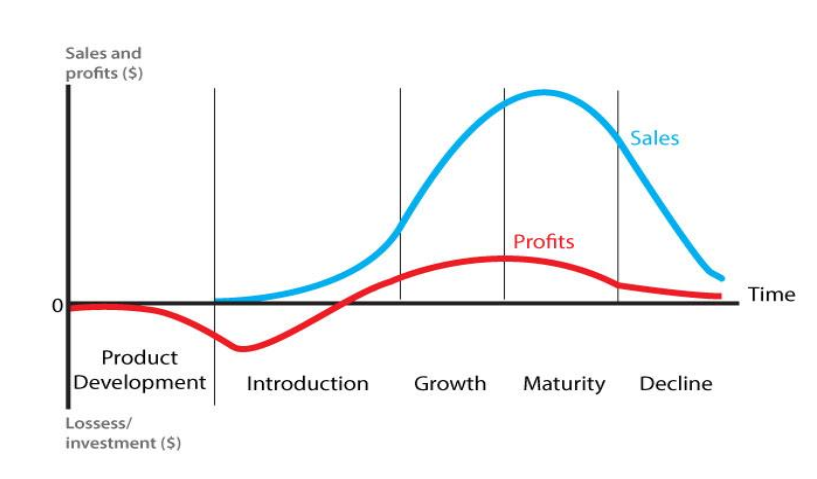
The five stages of a PLC are; product development, introduction, growth, maturity and decline.
These are illustrated in the diagram below:
(Source: CSUMB Marketing 306)
1. Product Development Stage
This is when an organization thinks about and develops an idea for a new product. At this stage the organization invests heavily without expecting any returns.
2. Introduction Stage
This is when the new product is launched and introduced into the market. The organization will invest in advertising and creating customer awareness while keeping prices down in order to attract customers.
3. Growth Stage
This is when there is an increase in sale of the product and the organization starts to earn profits due to repeat sales from customers who were acquired in the introduction stage. New customers are also acquired due to the good reputation of the product. This growth prepares the organization for market competition.
4. Maturity Stage
The sales of the product keep growing at this stage with competition being very aggressive since all players want to acquire a share in the market. Advertising and marketing is very dominant with the aim of acquiring new customers and retaining the current customers. Prices of the product also tend to be reduced as competition increases.
5. Decline Stage
Availability of new or improved products cause the sales of the existing product to fall. The organization will begin to reduce costs and spend less on advertising with the aim of getting rid of the remaining stock of the product before demand dies
Criticisms of the Product Life Cycle
As a planning tool, the PLC cannot be used on its own because of some limitations it has.
These limitations include the following;
- Data is used when sales have been done, otherwise planning can only be estimated as an organization waits for any sales.
- It is difficult to trace at which stage of the PLC a product has reached because there are fluctuations in the cycle.
- Marketing managers may make irrational decisions if they misinterpret the cycle.
- Managers may be tempted to assume the period of time a product will last in the market and this may affect decision making.
- In reality, the PLC curve is not always as smooth as it appears.
- Marketing strategies cannot fully rely on the PLC curve because the data is not conclusive.
- The PLC assumes that all products must follow the same cycle in their sales life.